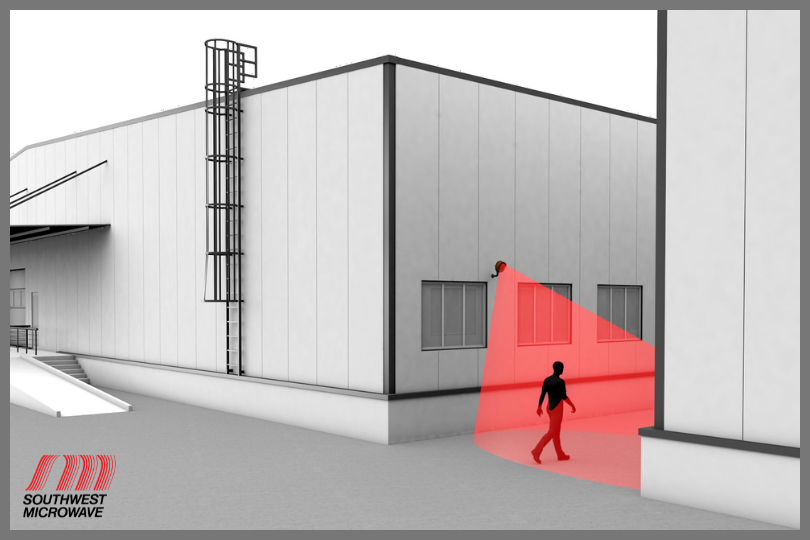
Outdoor perimeter intrusion detection systems operate in environments that are constantly changing. Weather, wildlife, vegetation, nearby traffic, and routine site activity all create conditions that a detection system must continuously evaluate.
When nuisance alarms occur, it’s easy to blame environmental factors. In reality, those alarms can reveal issues that extend beyond those conditions. They may indicate that the detection technology isn’t well matched to the application, that system design considerations weren’t fully addressed, or that installation and commissioning were not properly aligned with the site’s requirements.
Looking Beyond the Alarm
Every alarm demands a decision. Operators must determine whether an alarm represents an actual intrusion attempt or routine environmental activity before deciding on the appropriate response.
As nuisance alarms become more frequent, every alarm requires additional time and verification. The consequence isn’t simply more alarms; it’s growing uncertainty about whether the next alarm represents a condition requiring immediate attention.
Rather than treating nuisance alarms as isolated operational inconveniences, organizations should view them as valuable feedback on how well a perimeter intrusion detection system has been designed, deployed, and matched to the realities of the site it protects.
The Hidden Cost of Nuisance Alarms
The immediate impact of a nuisance alarm is often the time required to determine whether an intrusion has actually occurred. Operators review video, assess alarm data, or dispatch personnel to verify the event.
The longer-term impact extends well beyond additional investigations. Security resources are diverted, alarm fatigue increases, and confidence in the intrusion detection system begins to decline. As repeated non-threatening alarm events accumulate, every new notification requires additional verification before action can be taken.
For organizations protecting critical infrastructure, transportation hubs, utilities, industrial facilities, and other high-security sites, the credibility of each alarm directly influences how effectively security teams assess, prioritize, and respond to potential threats.
The Environment Doesn’t Cause Every Problem
It’s easy to focus on weather and other external influences, yet they may not provide the complete picture.
The physical characteristics of the site influence how a perimeter responds to everyday conditions. Just as important are the decisions made during system design, technology selection, installation, and commissioning. Together, these factors determine how effectively the system distinguishes routine activity from legitimate intrusion attempts.
The same sensor that performs exceptionally well in one environment may produce unnecessary alarms in another if deployed outside its intended application.
That’s why reducing nuisance alarms isn’t simply about selecting a better sensor. It’s about designing a perimeter intrusion detection system that reflects the realities of the site it protects.
There is No Universal Detection Technology
One of the most common questions in perimeter security is: Which detection technology is the best? The more appropriate question is: Which detection technology is best suited to this application?
Every perimeter has its own operational priorities, outdoor conditions, and physical constraints. A technology that performs exceptionally well in one application may not be the best choice for another, not because one detection method is better, but because the challenges are fundamentally different.
This philosophy is reflected in Southwest Microwave’s INTREPID™ portfolio, which brings together complementary technologies designed to address a broad range of perimeter applications and operational requirements.
Technology | Best Suited For | How It Helps Reduce Nuisance Alarms |
|---|---|---|
MicroPoint™ Fence Detection Systems | Fence-mounted perimeter detection | Analyzes fence disturbances to distinguish intrusion attempts from environmental fence movement. |
MicroTrack™ II Buried Cable System | Covert buried perimeter detection | Evaluates target characteristics to distinguish intrusion attempts from routine environmental activity. |
Microwave Sensors | Open areas, fence lines, gates, entryways, walls, and rooftops | Uses precisely controlled fields to ignore activity outside the intended coverage area. |
INTREPID™ LiDAR | Complex outdoor environments | Uses 3D spatial awareness and target classification to differentiate intrusion events from surrounding activity. |
INTREPID™ MicroFiber | Fence-mounted perimeter detection | Applies long-range DAS analytics to classify disturbances based on their unique signatures. |
The goal isn’t to identify a single “best” technology. It’s to identify the technology, or combination of technologies, that best addresses the challenges of the site.
Ask Better Questions. Build Better Systems.
Organizations evaluating perimeter security solutions often focus on range, sensor specifications, or individual product features.
Those factors are important, but they don’t tell the whole story.
Equally important questions include:
- How does the system distinguish routine environmental activity from intrusion attempts?
- What sensor technologies or analytics help reduce nuisance alarms?
- How can system performance be tailored to site-specific requirements?
- How is the system calibrated for site conditions?
- What maintenance or environmental changes could influence long-term performance?
- How does the system integrate with existing video management, access control, or PSIM platforms?
The answers often reveal how well a system will perform after installation, not just how it performs on paper.
A Better Measure of System Performance
The effectiveness of a perimeter intrusion detection system isn’t measured by how many alarms it generates.
It’s measured by how consistently those alarms represent conditions that warrant investigation.
Viewed from that perspective, nuisance alarms become more than operational inconveniences. They become an indicator of how well the entire perimeter detection system has been designed, implemented, and adapted to the site’s operating environment.
Organizations that treat nuisance alarms as feedback, not simply a problem to manage, are better positioned to improve alarm quality, strengthen operational effectiveness, and build perimeter intrusion detection systems that deliver reliable long-term performance.
Ready to Evaluate Your Perimeter Detection Strategy?
Every perimeter presents unique operational challenges. Identifying the right solution starts with understanding the site, its objectives, and the factors that influence performance.
Whether you’re planning a new installation or reassessing an existing system, Southwest Microwave can help you evaluate your application, identify the technologies best suited to your operational requirements, and design a solution that delivers dependable perimeter detection.
Explore the INTREPID™ portfolio or connect with one of our perimeter security specialists to discuss your site’s unique requirements.
About Southwest Microwave, Inc.
Southwest Microwave, Inc. produces and supports the world’s broadest range of integrated outdoor perimeter security systems for the protection of critical infrastructure, high value assets and personnel. With over 50 years of experience and more than 80,000 systems in 120 countries, Southwest Microwave detection technologies perform reliably in harsh external environments and fortify many of the world’s highest security sites in the government, military, utilities, industrial, transportation, correctional and VIP residential sectors. For more information, visit ssd.southwestmicrowave.com, X (formerly Twitter), LinkedIn, and YouTube.